


Are you as tired of some of the marketing and sales strategies that have become standard practice as most of the people I talk to are?
You know the ones… the false scarcity, the manufactured urgency, the endless last-call emails, the predictable sales pitches and DMs, and the tactics designed to push someone into a buying decision before they’ve had the space to know whether it’s right for them.
As I’ve been getting ready to release a new offer and mapping out the high-level marketing and sales strategy for my team, I created a simple framework for them that I call The Sacred Yes.
It’s really more of a philosophy that shifts how to think about the buyer journey and what happens immediately after someone says yes.
When someone decides to work with me, invests in one of my programs, or attends one of my live events, I want that decision to feel like a full-body yes.
I never want someone making a decision because they felt pressured, because there was false scarcity involved, or because a tactic pushed them into saying yes when it wasn’t actually right for them.
I know there are plenty of hardcore salespeople who would push back against this belief, arguing that people don’t always know what they want and that it’s not up to you whether they get results, it’s up to them, but I have a different perspective.
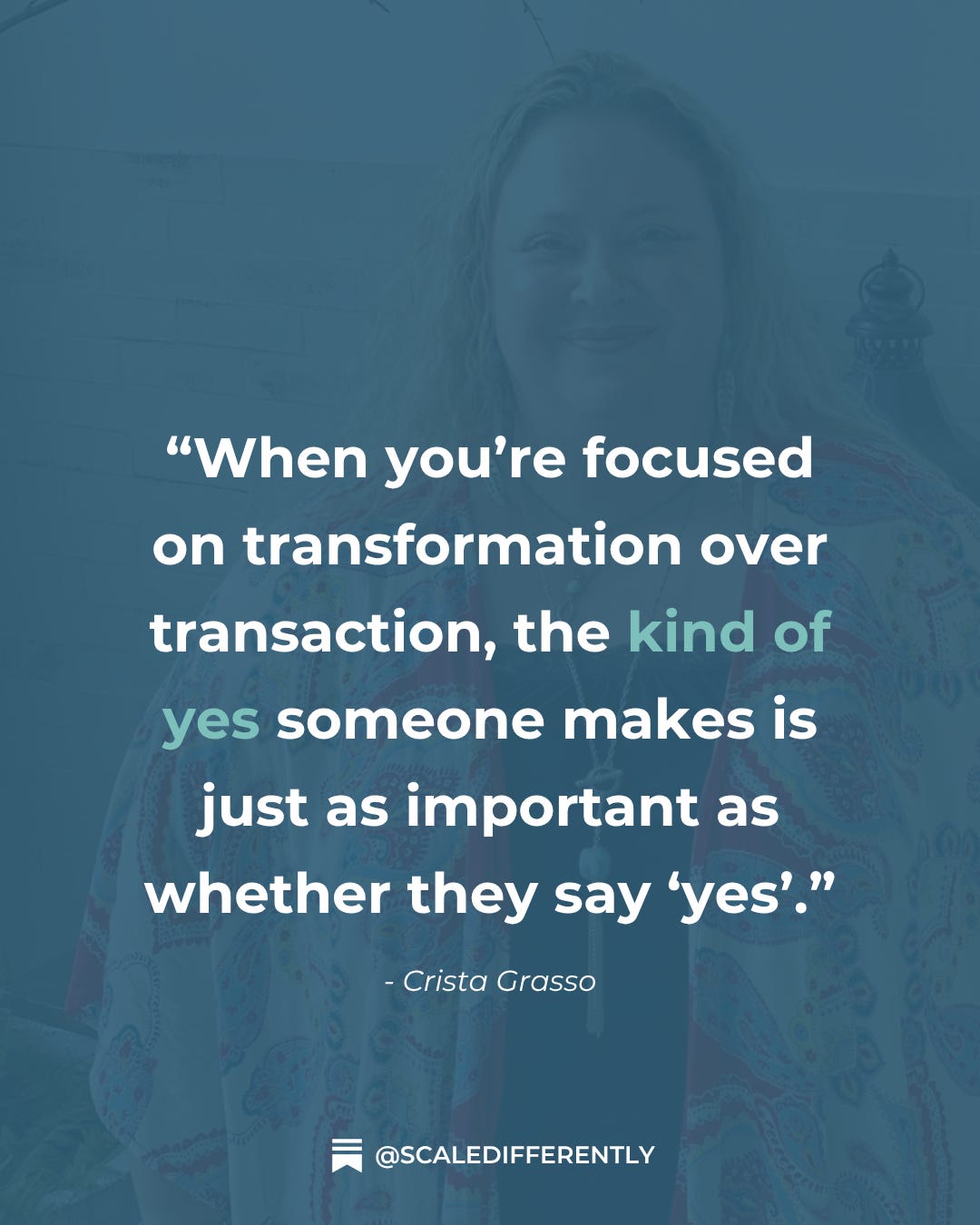
When you’re focused on transformation over transaction, I believe that the kind of yes someone makes is just as important as whether they say yes.
Because, while I can’t control whether someone takes action and does what’s required to see results, I can ensure I am only entering into engagements where I fully believe the transformation and results are possible for them.
And that requires them to be the right fit and all-in.
That’s where the idea of the Sacred Yes came from, and it ensures it’s the right decision for them and for you.
When looking at it through the client experience perspective, they move through 3 states:
I consider
I commit
I begin
Let’s break each state down.
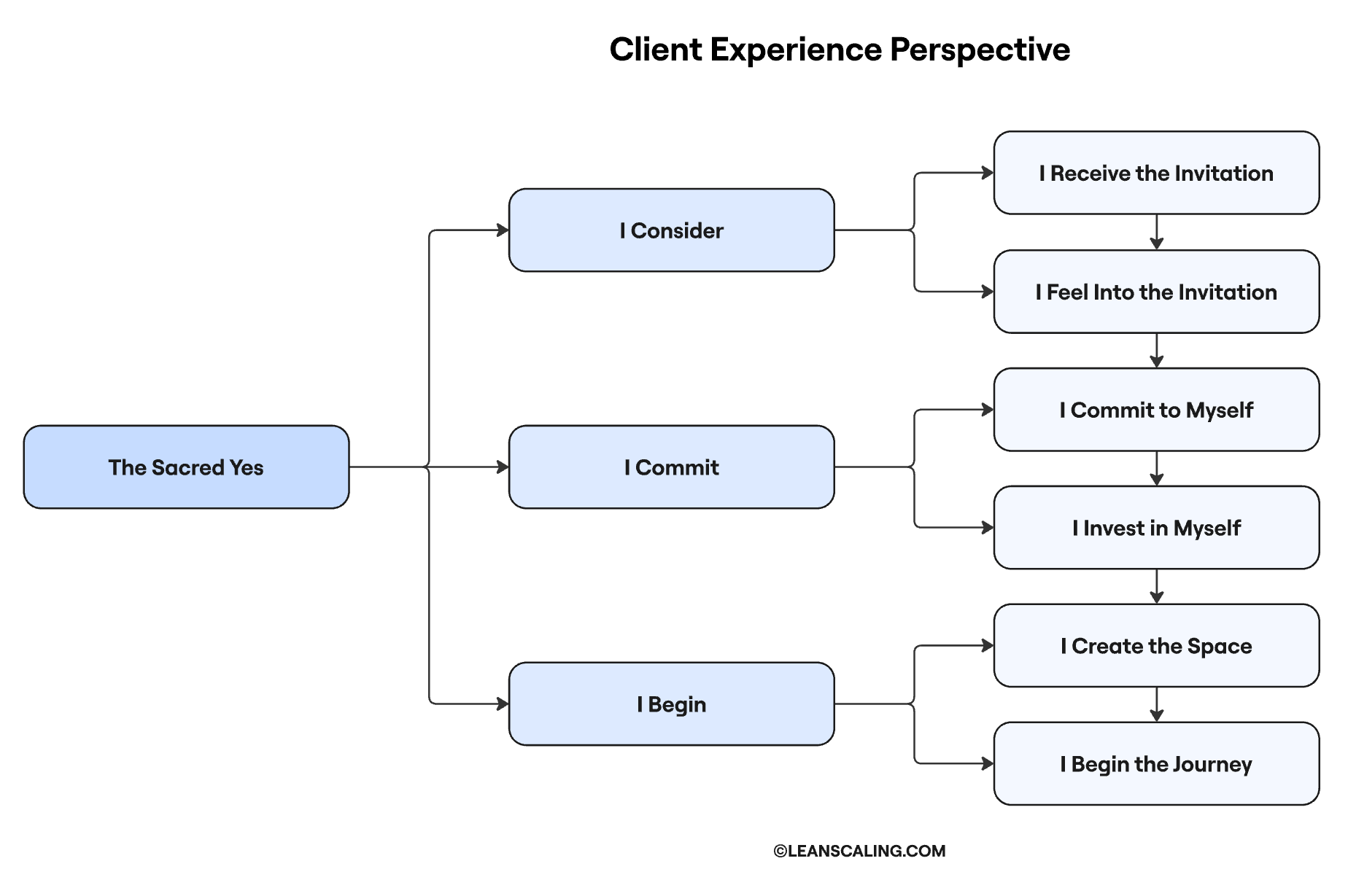
State 1: Consideration - “I consider”
Before someone can decide whether or not they want to work with you, there has to be an invitation.
That invitation could come through social media, email, a podcast episode, a workshop, an interview, a text, a challenge, a book, a signature talk, or any number of other things.
For me personally, I tend to love leading workshops and events because there’s something different about being with someone live, even when you’re ultimately watching a recording of something that was originally live.
There’s an energy to that experience that feels different to me than a prerecorded training that was always intended to be consumed on demand.
Your invitation might look completely different.
What matters is that you think intentionally about the invitation you’re making and what someone needs in order to genuinely consider it.
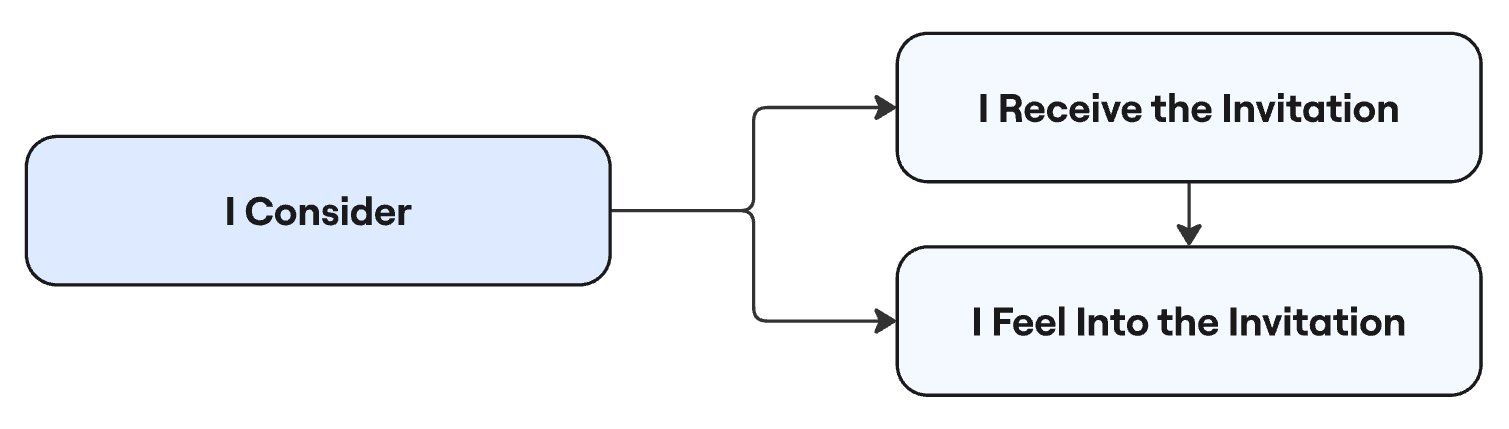
Because consideration has two different parts to it:
First, they have to receive the invitation
Then, they have to feel into the invitation
There’s the practical part, where someone is looking at what you’re offering and deciding whether it’s the right solution for them.
They’re typically looking at what’s included, how it works, what the investment is, what the experience looks like, and whether it seems likely to help them achieve the result they want.
But there’s also a feeling-oriented part of the decision that shouldn’t be overlooked.
They’re considering whether they connect with you, whether they trust you, whether you feel like the right person for them, and whether the experience you’re inviting them into feels like one they want to be part of.
You can have the perfect checklist of everything someone says they want, and if they don’t connect with you or with the experience, it still may not be the right fit.
On the flip side, sometimes someone can connect with you and your work so strongly that the details of what’s included in the experience matters much less because they already know they want to be in your world.
Your marketing should give people both.
Consider your invitation
As you look at this stage of your buyer journey, consider:
How are you inviting your ideal clients to work with you?
Does that invitation give them enough practical information to understand what you’re offering and whether it fits what they need?
Does it also give them enough of a sense of you, your perspective, and the experience to feel into whether it’s right for them?
Are you using invitation formats that you genuinely enjoy and that fit the way you want to market and sell?
Is there anything about the way you currently invite people into your work that feels outdated, overcomplicated, or disconnected from how you want to do business now?
If you tend to be very analytical and your marketing is mostly facts, figures, features, and deliverables, make sure there is also enough of you and enough of the experience present that someone can feel into whether it’s right for them.
If your marketing is very feeling-oriented and experiential, make sure someone still has enough practical information to determine whether the offer itself gives them what they need.
The consideration stage is where someone is deciding whether they trust you and whether the invitation feels like the right one for them.
Then they need to make a decision.
State 2: Commitment - “I commit”
At some point, consideration leads to a decision, and indecision is still a decision.
During consideration, someone is largely deciding whether they trust you or your offer.
During commitment, they’re deciding whether they trust themselves.
They may fully believe that you can help them and still have to decide whether they’re willing to show up, whether they’re going to create the time and space, whether now is the right time, and whether they’re willing and able to make the investment in themselves right now.
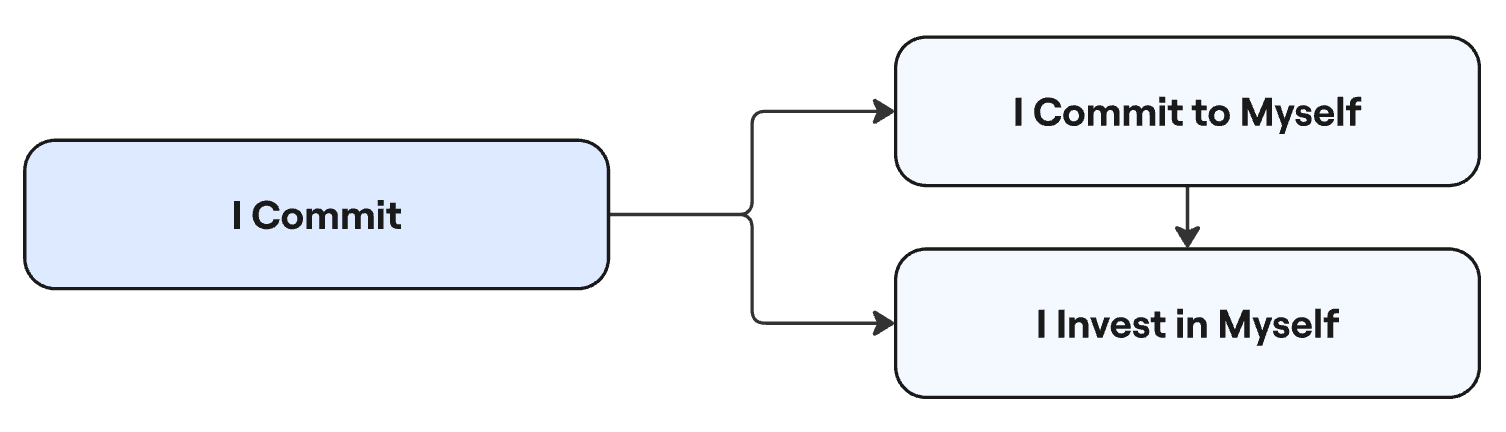
That’s why I think of the commitment as much more of a commitment to themselves.
Now there are mechanical pieces you need in place to make that commitment possible for them, like a sales page, a checkout page, a sales call, an application, confirmation emails, payment options, or whatever else fits how you sell.
But underneath all of those things is someone deciding whether they’re willing to make the commitment to themselves.
If you have a sales conversation as part of your process, part of what you’re doing is helping them understand whatever they need to understand so they can make that decision clearly.
Consider their commitment
Look at what happens between someone becoming interested and making a decision, and consider:
What does someone need to know before they can make a clear decision?
Where might they still have unanswered questions or uncertainty?
Does your sales process give them what they need to evaluate whether this is the right commitment for them?
Is the investment, timing, and experience clear enough that someone can make an informed decision?
Are there any parts of your current sales process that rely on pressure or urgency that no longer feel aligned with how you want someone to say yes?
Someone may be asking themselves whether they are ready to do this, whether they are willing to make the space for it, whether they are willing to invest in themselves right now, and whether they believe they’ll show up and follow through.
How can your process create enough clarity and space for them to answer that for themselves?
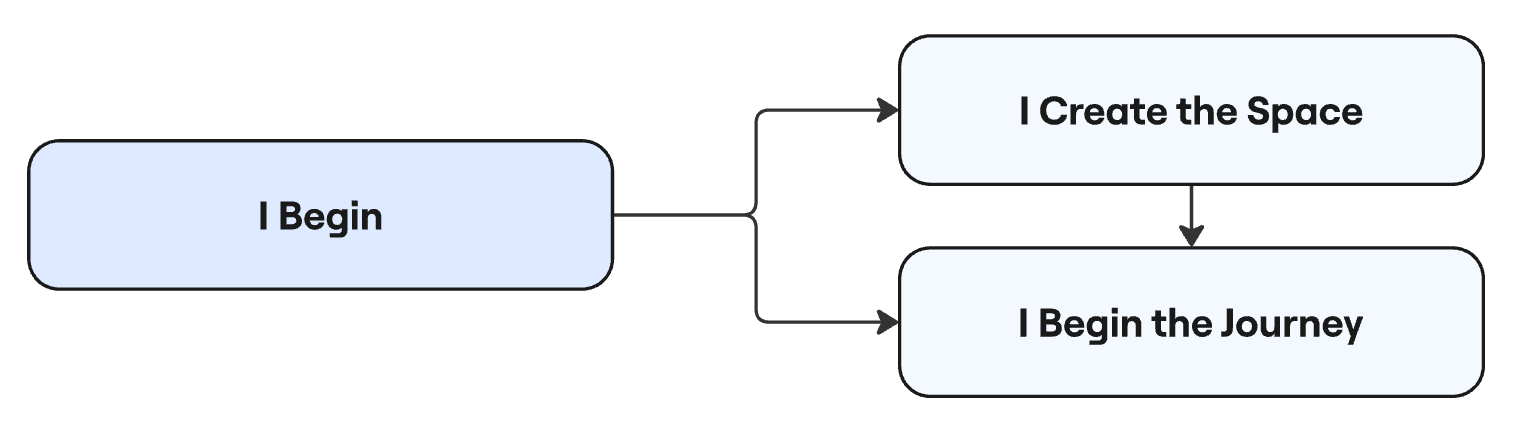
State 3: Beginning - “I begin”
There is so much focus in marketing and sales on getting someone to say yes that sometimes, by the time the credit card comes through, very little thought has gone into what happens immediately after.
Let’s say someone joins an experience today that doesn’t begin for another month.
They’ve made the decision, they’ve paid, and in that moment they’re probably at one of the highest points of excitement and commitment they’re going to feel.
What happens next matters, especially when you are committed to seeing them experience results.
The period between saying yes and officially starting is where someone can begin questioning the decision they made, even when it was the right one.
They can start wondering whether they really have the time, whether now was the right time, whether they should have spent the money, whether they’re going to be able to follow through, or whether something else would have been a better choice.
That’s the point where I think the Sacred Yes needs to keep going.
It shouldn’t stop at the initial yes. It needs to include them beginning.
That could mean sending a welcome video, giving them access to a community, having them immediately put dates into their schedule, sending something physical in the mail, giving them a reflection exercise, or simply giving them one small thing they can do right away.
The important thing is that there’s something they can begin doing now instead of everything living in the future, especially if there is a delay between joining and when your program or service begins.
Consider the beginning
Walk through what currently happens from the second someone says yes until the official experience begins and consider:
What do they receive immediately after purchasing?
Is there something they can do right away?
Can they put important dates on their calendar immediately?
Is there something they can read, watch, download, reflect on, or complete that starts connecting them to the experience?
If there is a significant gap before the official start date, how are you keeping them connected during that time?
Is there a quick win they can experience even before the experience fully begins?
Even the act of putting sessions on their calendar, downloading a guide, loading something onto their reMarkable, reflecting on a few prompts, or watching a short welcome video can make a meaningful difference because it takes the commitment they made in their head and starts integrating it into their actual life.
They’ve moved from “this is something I’m going to do” into “this is something I’m actively doing and have started.”
Anything you can do to shift the experience from something they’re going to do in the future into something they are actively part of now can make a meaningful difference in retention, engagement, and ultimately the results they receive.
Walk through your Sacred Yes buyer journey
Now take the three stages and look at them together:
I consider. I commit. I begin.
Start at the very first invitation someone receives and follow the experience all the way through the first action they take after saying yes.
As you walk through it, consider where the journey feels aligned with how you want to market and sell today and where you may want to reimagine something.
Maybe you experiment with a different kind of invitation.
Maybe you’re over the traditional webinar with the sales pitch at the end, followed by ten sales emails, a last call, and then another last call.
Maybe you’d rather create a live experience, write something, record something, or invite people into your work in a way that feels much more aligned with how you want to sell.
Maybe the opportunity is in your sales process, or maybe your marketing and sales already work well and the biggest opportunity is what happens after someone says yes.
As you review the full journey, consider:
Consideration: Is the invitation clear, compelling, and aligned with how I want people to experience my work?
Commitment: Does my sales process help someone make the right decision for themselves?
Beginning: Does someone immediately start experiencing the value of what they said yes to?
There is no single prescribed way to do this.
The point of the Sacred Yes is to look at the full journey and consider what it would take for the decision to feel right for the person buying, and for you, and then create an experience that supports that decision all the way from consideration through commitment and into the beginning of the work.
Just for fun, here is a sneak peek into how I am using it as part of my new offer.
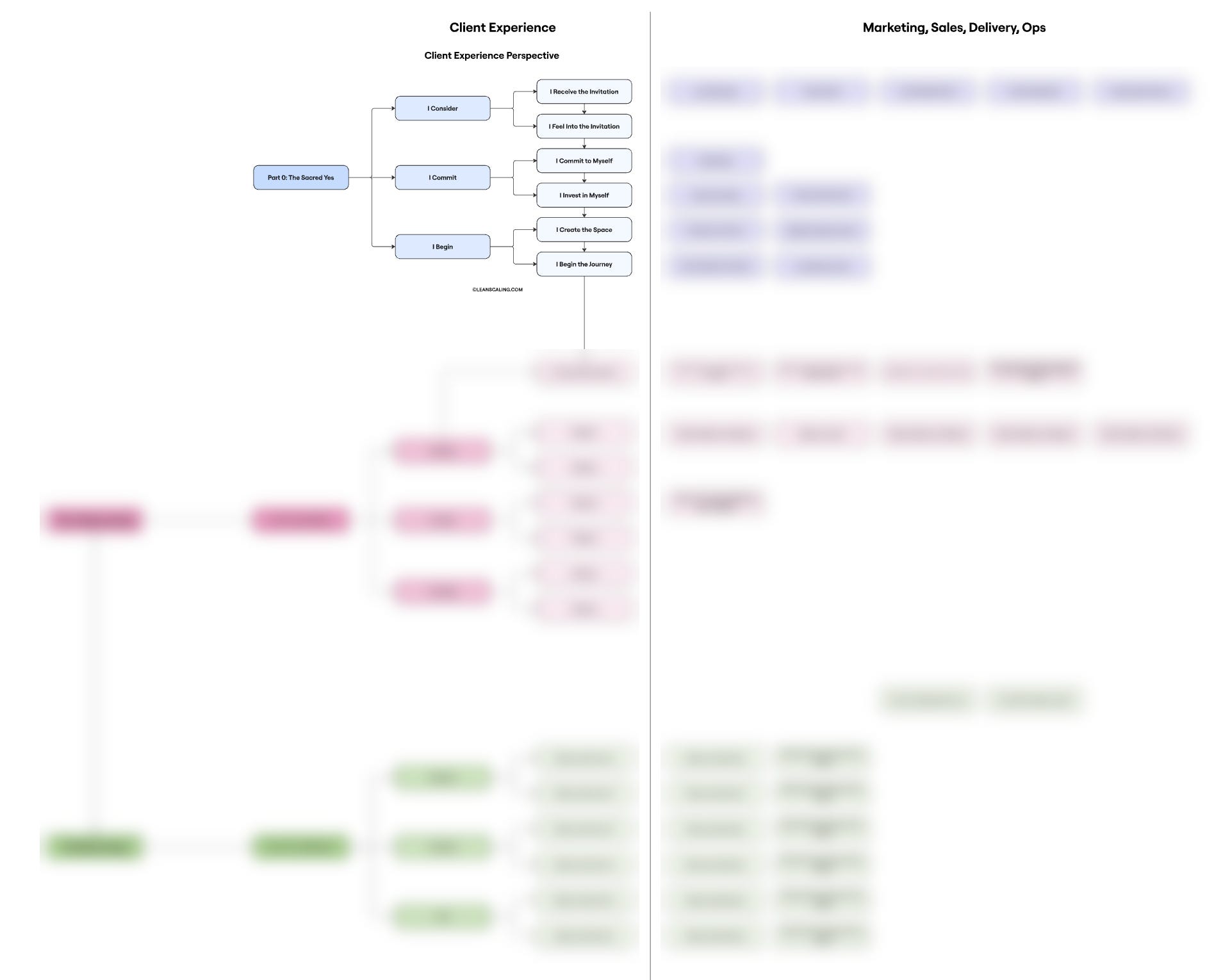
I always start by mapping out the client experience. The Sacred Yes followed by what they do within the offer itself, including their experience and results.
Then I map out what’s needed to support the client experience and results from a marketing, sales, delivery, and ops perspective.
I’d love to hear what comes up as you walk through your own Sacred Yes buyer journey and whether there is anything you decide to reimagine.